
Hernias: Understanding the types, symptoms and treatments
October 13, 2026
By: Saint Agnes Medical Center
Tags: Hernia, Hernia Repair
Noticing a new lump in your abdomen or groin can raise questions, especially if it becomes more noticeable when you cough or lift something. It may be a hernia—a common condition that does not always cause pain but should be evaluated by a physician. To help explain what to look for and how hernias are treated, we spoke with a board-certified general surgeon specializing in robotic surgery with Saint Agnes Care.

“Hernia is when you have a defect in the abdominal wall or the diaphragm and contents protrude through that defect. Symptoms of a hernia in the abdominal wall or the groin are bulging that worsens with straining or lifting or coughing, sometimes associated with pain and discomfort,” said Dr. Russell Martin, Board-Certified General Surgeon, Saint Agnes Care.
“Understanding the symptoms and treatment options can help you feel more informed when talking with your doctor and deciding on the next steps in your care."
What are the symptoms of a hernia?
Not all hernias cause symptoms at first, and the signs can vary depending on where the hernia develops. For hernias in the abdomen or groin, you may notice:
- A visible lump or bulge
- A feeling of heaviness or pressure in the affected area
- A bulge that becomes more noticeable when coughing, lifting or straining
- A bulge that becomes smaller or disappears when you lie down
- Pain or aching that worsens during physical activity
Even a bulge comes and goes or does not hurt, it is worth discussing with your doctor. An evaluation can help determine whether it is a hernia and what care may be needed.
What are the different types of hernias?
Hernias can develop in several areas of the body, and their names generally describe where they occur. Understanding these differences can help you make sense of your diagnosis and the treatment your doctor recommends.
- Inguinal hernia: Located in the groin, this is the most common type of hernia and affects men more often than women.
- Femoral hernia: Develops near the top of the inner thigh, just below the groin. This type is more common in women.
- Hiatal hernia: Occurs when the upper part of the stomach pushes through an opening in the diaphragm into the chest. It does not cause a visible external bulge but may contribute to heartburn or acid reflux.
- Incisional hernia: Develops when tissue pushes through a weakened area at the site of a previous abdominal surgery.
- Umbilical hernia: Occurs when tissue pushes through a weak area near the belly button.
You may also hear the term ventral hernia, which describes a hernia through the front of the abdominal wall. This broader category includes umbilical and incisional hernias.
Although these conditions share a name, they do not all cause the same symptoms or require the same approach to care. Identifying the type of hernia is an important step in determining how to treat it.
How do you treat a hernia?
Treatment depends on the type of hernia, your symptoms and your overall health. Some hernias can be monitored by a physician, while others require surgery.
Dr. Martin explains that men with small inguinal hernias that are not causing symptoms may be able to delay surgery through an approach called “watchful waiting.” This means checking in regularly with a physician and watching for changes. Many men who initially choose monitoring eventually have surgery as symptoms develop or worsen.
For women with groin hernias, the recommendation is often different. Surgical repair is generally recommended for women who are not pregnant because of the greater likelihood of a femoral hernia, which carries a higher risk of tissue becoming trapped and losing its blood supply.
When surgery is needed, a hernia may be repaired laparoscopically, using small incisions, a camera and specialized instruments. Open surgery is another approach, using an incision near the hernia so the surgeon can directly view and repair the area. Your surgeon will explain which option best fits your needs.
If you have a hernia, staying in touch with your physician matters even when you are not experiencing pain. Together, you can discuss changes in your symptoms and determine when treatment may be appropriate.
When does a hernia need immediate attention?
Seek emergency medical care if a hernia causes sudden or severe pain, vomiting, redness or a bulge that no longer goes back in when it previously did. These can be signs that tissue has become trapped or its blood supply has been cut off.
Knowing which changes to watch for can help you act promptly and get the care you need.
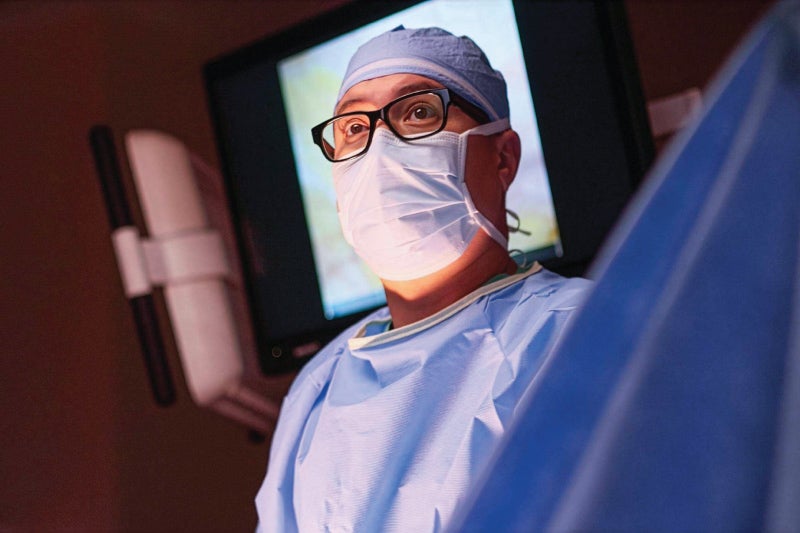
Meet Dr. Russell Martin
Learn more about Dr. Martin’s experience and surgical expertise, and find information about scheduling an appointment with Saint Agnes Care.
Learn more
Explore surgical care options
Learn about advanced surgical options available to support your care, including minimally invasive and robotic procedures at Saint Agnes.
Learn more